Buy asipr.com ?
We are moving the project
asipr.com .
Are you interested in purchasing the domain
asipr.com ?
domain@kv-gmbh.de · 0541-91531010
Buy asipr.com ?
What is the difference between proportional and inverse proportional?
Proportional and inverse proportional relationships are two types of relationships between two variables. In a proportional relationship, as one variable increases, the other variable also increases at a constant rate. This means that the ratio between the two variables remains the same. In an inverse proportional relationship, as one variable increases, the other variable decreases at a constant rate. This means that the product of the two variables remains constant. **
How can one recognize proportional and inverse proportional relationships?
Proportional relationships can be recognized when two quantities increase or decrease at the same rate. This means that when one quantity doubles, the other quantity also doubles. Inverse proportional relationships, on the other hand, can be recognized when one quantity increases while the other decreases at a constant rate, or vice versa. This means that when one quantity doubles, the other quantity is halved. One can recognize these relationships by plotting the data on a graph and observing if the points form a straight line through the origin for proportional relationships, or if the points form a curve for inverse proportional relationships. **


Similar search terms for Non-proportional
Top-Angebote
Products related to Non-proportional:
-
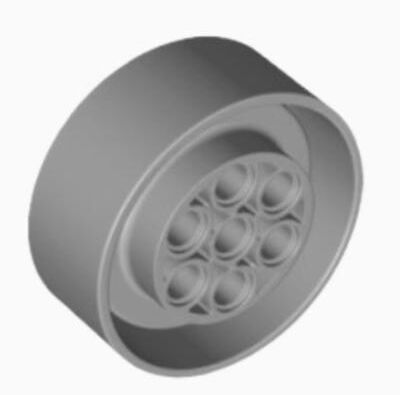
Lush Living Finds Perforated Brick Assembly Toy Accessories With Technology Mechanical Wheels Perforated Brick Assembly Toy Accessories With Technology Mechanical WheelsEnhance Creativity with Technology Mechanical Wheels Unlock the power of innovation with our technology mechanical wheels, designed specifically for perforated brick assembly toy accessories. Whether you are a hobbyist or a seasoned builder, these...43,97 $*Shipping: 0,00 $Secure redirect to the provider
-
Inspire Curations Ceramic Precision Screwdriver Antistatic Non Magnetic Screwdriver Flat & Phillips For Electronics Repair 4pcsHandle delicate electronics with confidence using this ceramic precision screwdriver. Designed with a zirconium ceramic tip and an antistatic handle, this nonmagnetic screwdriver is ideal for adjusting sensitive electronic components without causing...78,00 $*Shipping: 0,00 $Secure redirect to the provider
-
Klutz: LEGO GadgetsThis activity kit will have you building 11 machines including a gravity powered car and a wacky boxing robot. The fun doesn't stop once you've completed all of the projects in the book - open-ended prompts will inspire you to continue experimenting...24,99 $*Shipping: 0,00 $Secure redirect to the provider
-
Inspired Deals 20PCS 5.8mm 6 Pin Tactile Switch Latching Power Button For PCB Electronics Non LatchingBuild dependable controls into compact electronics with a switch designed for confident, repeatable operation. This 20piece set of 5.8mm tactile switches gives makers, technicians, and electronics enthusiasts a compact solution for power and control...32,97 $*Shipping: 0,00 $Secure redirect to the provider



-
What is the difference between proportional relationships and inverse proportional relationships?
Proportional relationships are those in which the two variables increase or decrease at a constant rate. In other words, when one variable doubles, the other variable also doubles. In contrast, inverse proportional relationships are those in which one variable increases as the other decreases, and vice versa. In an inverse proportional relationship, the product of the two variables remains constant. In other words, when one variable doubles, the other variable is halved. **
-
What are proportional relationships?
Proportional relationships are relationships between two quantities where they change in a consistent manner. This means that as one quantity increases or decreases, the other quantity also increases or decreases in a predictable way. In a proportional relationship, the ratio between the two quantities remains constant. This can be represented by a straight line when graphed. **
-
Which of the relationships is inversely proportional and which is directly proportional?
The relationship between the distance traveled and the time taken is inversely proportional, as the faster you travel, the less time it takes to reach a destination. On the other hand, the relationship between the force applied and the acceleration produced is directly proportional, as increasing the force applied will result in a corresponding increase in acceleration. **
-
Which of the assignments is inversely proportional and which is directly proportional?
The assignment of distance traveled and time taken is inversely proportional, as the distance traveled decreases as the time taken increases. On the other hand, the assignment of force and acceleration is directly proportional, as the force increases, the acceleration also increases. **


How can I recognize if a function is proportional or inversely proportional?
You can recognize if a function is proportional by checking if the ratio of the output to the input is constant. In other words, if the function can be written in the form y = kx, where k is a constant, then the function is proportional. On the other hand, if the function can be written in the form y = k/x, where k is a constant, then the function is inversely proportional. Additionally, if the graph of the function is a straight line passing through the origin, it is proportional, while if the graph is a hyperbola, it is inversely proportional. **
What are non-invasive medical devices?
Non-invasive medical devices are tools or equipment that do not penetrate the body or break the skin during their use. These devices are designed to diagnose, monitor, or treat medical conditions without the need for surgery or other invasive procedures. Examples of non-invasive medical devices include blood pressure monitors, thermometers, and ultrasound machines. These devices are often preferred by patients and healthcare providers due to their lower risk of complications and ease of use. **
Top-Angebote
Products related to Non-proportional:
-
Rare Purchases Piece Repair Tool Kit With Torx Screwdrivers For Digital Devices And Gadgets magnetismIntroducing our Multifunctional Precision Screwdriver Set, the essential tool kit for anyone who works with digital devices. Whether you're repairing a phone, tablet, PC, or any other gadget, this versatile tool set provides all the necessary...49,97 $*Shipping: 0,00 $Secure redirect to the provider
-
Lush Living Finds Perforated Brick Assembly Toy Accessories With Technology Mechanical Wheels Perforated Brick Assembly Toy Accessories With Technology Mechanical WheelsEnhance Creativity with Technology Mechanical Wheels Unlock the power of innovation with our technology mechanical wheels, designed specifically for perforated brick assembly toy accessories. Whether you are a hobbyist or a seasoned builder, these...43,97 $*Shipping: 0,00 $Secure redirect to the provider
-
Inspire Curations Ceramic Precision Screwdriver Antistatic Non Magnetic Screwdriver Flat & Phillips For Electronics Repair 4pcsHandle delicate electronics with confidence using this ceramic precision screwdriver. Designed with a zirconium ceramic tip and an antistatic handle, this nonmagnetic screwdriver is ideal for adjusting sensitive electronic components without causing...78,00 $*Shipping: 0,00 $Secure redirect to the provider
-
What is the difference between proportional and inverse proportional?
Proportional and inverse proportional relationships are two types of relationships between two variables. In a proportional relationship, as one variable increases, the other variable also increases at a constant rate. This means that the ratio between the two variables remains the same. In an inverse proportional relationship, as one variable increases, the other variable decreases at a constant rate. This means that the product of the two variables remains constant. **
-
How can one recognize proportional and inverse proportional relationships?
Proportional relationships can be recognized when two quantities increase or decrease at the same rate. This means that when one quantity doubles, the other quantity also doubles. Inverse proportional relationships, on the other hand, can be recognized when one quantity increases while the other decreases at a constant rate, or vice versa. This means that when one quantity doubles, the other quantity is halved. One can recognize these relationships by plotting the data on a graph and observing if the points form a straight line through the origin for proportional relationships, or if the points form a curve for inverse proportional relationships. **
-
What is the difference between proportional relationships and inverse proportional relationships?
Proportional relationships are those in which the two variables increase or decrease at a constant rate. In other words, when one variable doubles, the other variable also doubles. In contrast, inverse proportional relationships are those in which one variable increases as the other decreases, and vice versa. In an inverse proportional relationship, the product of the two variables remains constant. In other words, when one variable doubles, the other variable is halved. **
-
What are proportional relationships?
Proportional relationships are relationships between two quantities where they change in a consistent manner. This means that as one quantity increases or decreases, the other quantity also increases or decreases in a predictable way. In a proportional relationship, the ratio between the two quantities remains constant. This can be represented by a straight line when graphed. **
Similar search terms for Non-proportional
-
Klutz: LEGO GadgetsThis activity kit will have you building 11 machines including a gravity powered car and a wacky boxing robot. The fun doesn't stop once you've completed all of the projects in the book - open-ended prompts will inspire you to continue experimenting...24,99 $*Shipping: 0,00 $Secure redirect to the provider
-
Inspired Deals 20PCS 5.8mm 6 Pin Tactile Switch Latching Power Button For PCB Electronics Non LatchingBuild dependable controls into compact electronics with a switch designed for confident, repeatable operation. This 20piece set of 5.8mm tactile switches gives makers, technicians, and electronics enthusiasts a compact solution for power and control...32,97 $*Shipping: 0,00 $Secure redirect to the provider
-
Rare Purchases Piece Repair Tool Kit With Torx Screwdrivers For Digital Devices And Gadgets hand TwistIntroducing our Multifunctional Precision Screwdriver Set, the essential tool kit for anyone who works with digital devices. Whether you're repairing a phone, tablet, PC, or any other gadget, this versatile tool set provides all the necessary...39,97 $*Shipping: 0,00 $Secure redirect to the provider
-
Inspire Curations Ceramic Precision Screwdriver Antistatic Non Magnetic Screwdriver Flat & Phillips For Electronics Repair cd 15Handle delicate electronics with confidence using this ceramic precision screwdriver. Designed with a zirconium ceramic tip and an antistatic handle, this nonmagnetic screwdriver is ideal for adjusting sensitive electronic components without causing...45,50 $*Shipping: 0,00 $Secure redirect to the provider
-
Which of the relationships is inversely proportional and which is directly proportional?
The relationship between the distance traveled and the time taken is inversely proportional, as the faster you travel, the less time it takes to reach a destination. On the other hand, the relationship between the force applied and the acceleration produced is directly proportional, as increasing the force applied will result in a corresponding increase in acceleration. **
-
Which of the assignments is inversely proportional and which is directly proportional?
The assignment of distance traveled and time taken is inversely proportional, as the distance traveled decreases as the time taken increases. On the other hand, the assignment of force and acceleration is directly proportional, as the force increases, the acceleration also increases. **
-
How can I recognize if a function is proportional or inversely proportional?
You can recognize if a function is proportional by checking if the ratio of the output to the input is constant. In other words, if the function can be written in the form y = kx, where k is a constant, then the function is proportional. On the other hand, if the function can be written in the form y = k/x, where k is a constant, then the function is inversely proportional. Additionally, if the graph of the function is a straight line passing through the origin, it is proportional, while if the graph is a hyperbola, it is inversely proportional. **
-
What are non-invasive medical devices?
Non-invasive medical devices are tools or equipment that do not penetrate the body or break the skin during their use. These devices are designed to diagnose, monitor, or treat medical conditions without the need for surgery or other invasive procedures. Examples of non-invasive medical devices include blood pressure monitors, thermometers, and ultrasound machines. These devices are often preferred by patients and healthcare providers due to their lower risk of complications and ease of use. **
* All prices are inclusive of VAT and, if applicable, plus shipping costs. The offer information is based on the details provided by the respective shop and is updated through automated processes. Real-time updates do not occur, so deviations can occur in individual cases. ** Note: Parts of this content were created by AI.